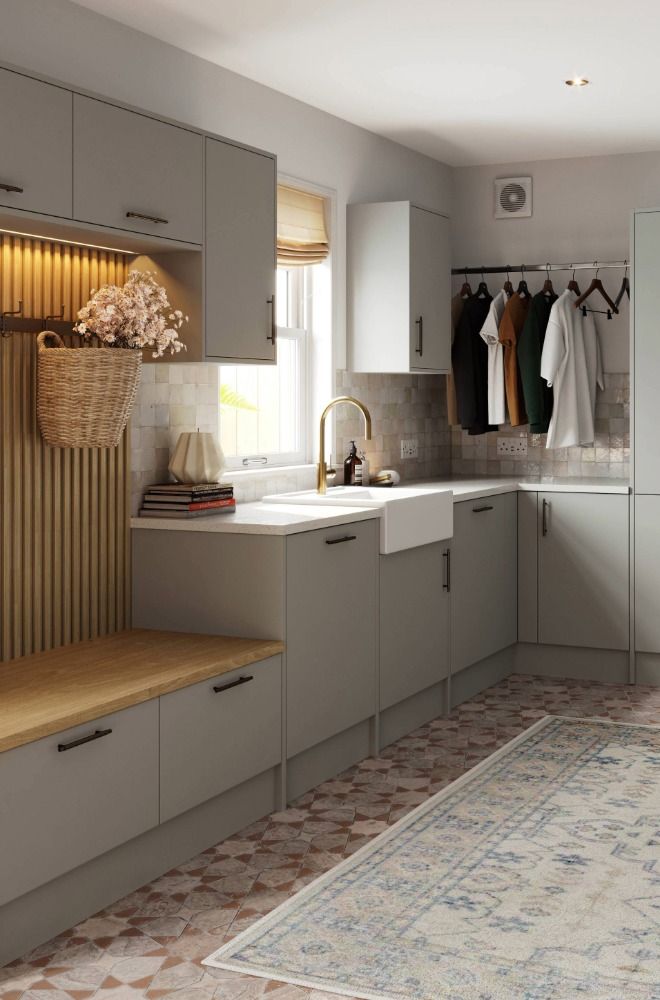

3 Top Tips for L-Shaped Kitchens
An L-shaped kitchen is a smart, space-saving layout that blends style with practicality. This guide covers everything from the benefits of an L-shaped layout to 3 top ideas for designing this type of kitchen.

An L-shaped kitchen is a smart, space-saving layout that blends style with practicality. This guide covers everything from the benefits of an L-shaped layout to the top 3 things you should consider when designing this type of kitchen.
What is an L-Shaped Kitchen? Your Questions Answered
IIt’s actually quite simple. An L-shaped kitchen is when your kitchen cabinetry forms the shape of an “L”. Many people wonder what they can and can’t do with this layout, but the truth is, the design options are almost endless. Let’s take a closer look at why this layout could be the perfect way to make the most of your space.
While it often comes down to personal preference, the L-shaped kitchen is a brilliant layout for balancing functionality and style. Whether you’re after a sleek, modern design or want to include an island, this layout can work beautifully for either.
L-shaped kitchens are one of the most practical and versatile options available. They’re easy to move around in, simple to plan, and they work well in both small and large spaces. Whether you’re dreaming of a classic shaker-style kitchen or something more contemporary, this layout gives you a solid, adaptable foundation to work with.
The answer: smart storage. These corners are ideal for clever solutions like pull-out units, carousels, a prestige larder, or other space-saving ideas that make your kitchen more efficient and organised.

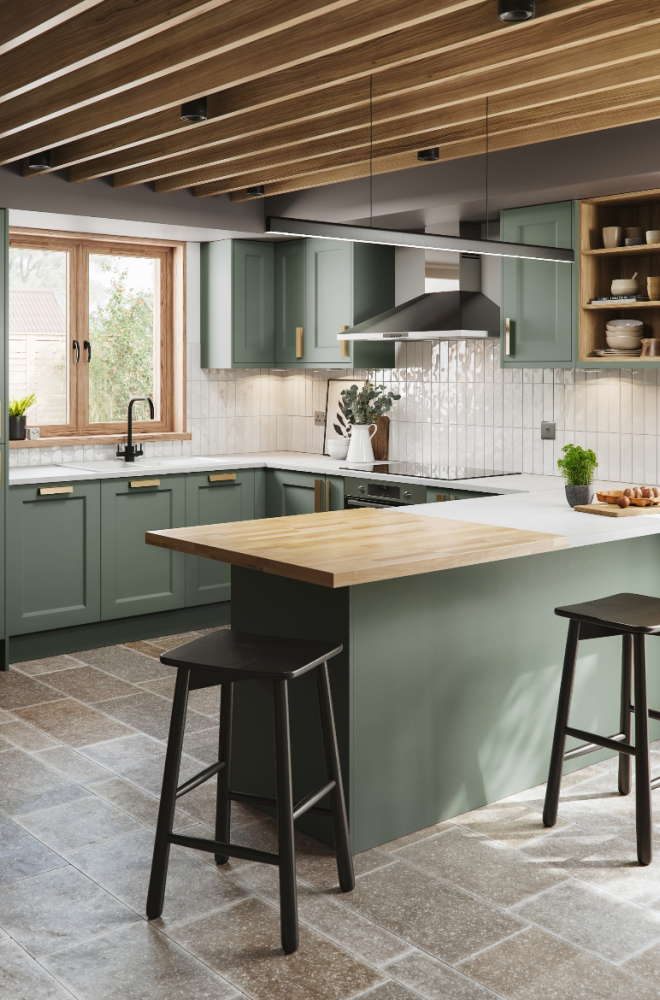
The L-Shaped layout can even work with a kitchen island
3 L-Shaped Kitchen Ideas
If you're considering an L-shaped kitchen, here are a few key things to think about before you get started.
1. Aim for Balance and Functionality
A well-balanced kitchen is not only more visually appealing, but it also improves how the space functions day-to-day. L-shaped kitchens naturally create a flow between different zones, but getting the balance right between style and practicality is crucial.
Start by thinking carefully about how you use the space. The longer wall is often used for cabinetry and appliances, while the shorter, connecting wall can provide additional storage or preparation space. Position your fridge at one end to avoid interrupting the workflow, and try to group appliances together in a logical way.
The goal is to keep everything looking cohesive. In an L-shaped layout, your eyes follow the lines of the space. Avoid placing anything too visually disruptive.
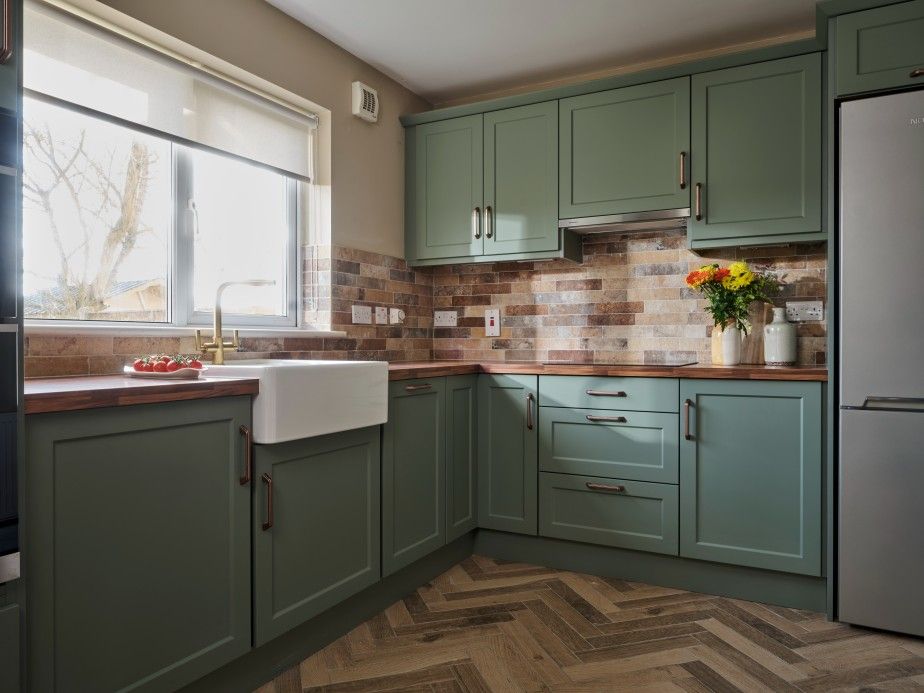
The fridge is positioned at one end to avoid interrupting the workflow
2. Work with Your Architecture
Every home has its quirks, whether that’s sloped ceilings, alcoves, or large windows. The good news is that L-shaped kitchens are incredibly flexible and work well with these unique features.
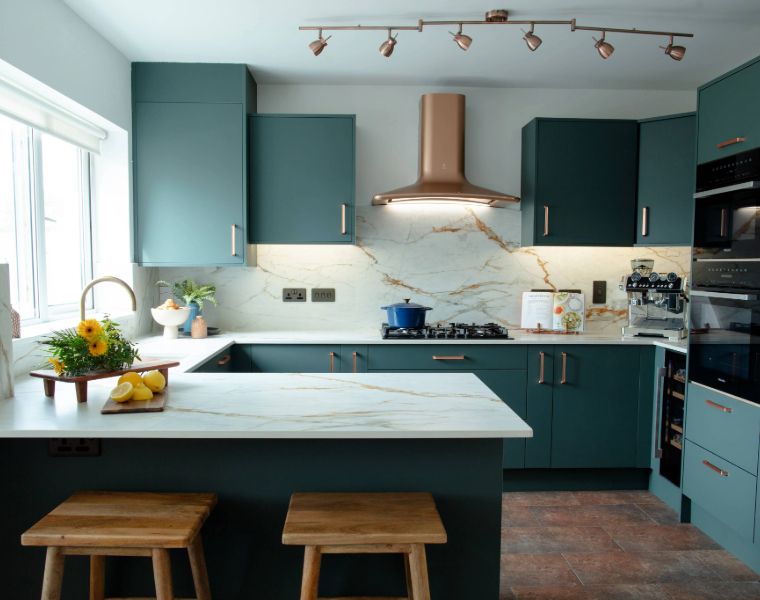
Rather than seeing these architectural details as obstacles, use them to your advantage. For example, if you’ve got a large window in your kitchen, consider placing your worktop or cabinetry directly underneath. This not only lets in natural light but also creates a balanced and attractive focal point.
Even awkward corners and doorways can be accommodated with smart planning.
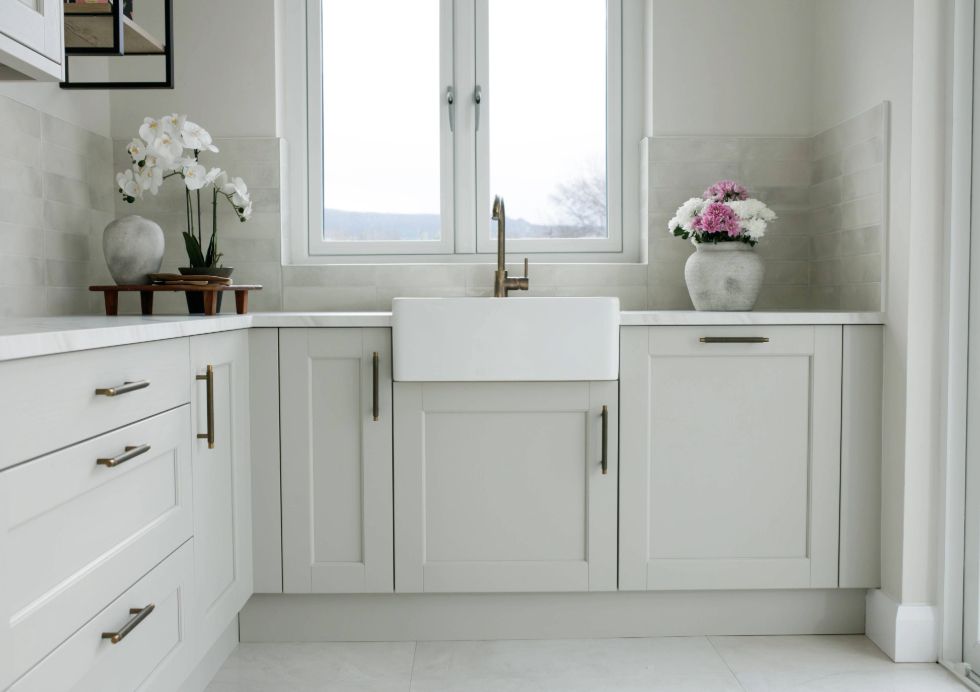
The window becomes a focal point in this L-shaped design
3. Use the Golden Triangle Rule for Better Flow
The "golden triangle" is one of the key layout principles in kitchen design. This classic design rule focuses on positioning your three key work zones - the hob, the sink, and the fridge - to form a triangle. The idea is to minimise the walking distance between each zone. The beauty of an L-shaped kitchen is that it can still follow the golden triangle rule, even in smaller or more compact rooms.

The golden triangle rule in action
For more inspiration, be sure to check out our kitchens or download our kitchen brochure to see how Cash & Carry Kitchens can transform your space!