


Kitchen Triangle Rule: Does It Work?
One of the most well-known kitchen layout principles is the Kitchen Triangle Rule, also called the Golden Triangle or Working Triangle. Here’s what it is, where it came from, and whether it still works for modern homes.

What Is the Kitchen Triangle Rule?
The Kitchen Triangle Rule is a classic kitchen design principle that positions the three main work areas- the sink, the hob/oven, and the refrigerator - at the points of a triangle.
This layout creates clear, distinct zones that make moving between preparation, cooking, and storage quick and efficient.
Where Did the Kitchen Triangle Rule Come From?
The rule originated in the 1940s at the University of Illinois School of Architecture in the USA.
It was originally designed to reduce building costs and materials. However, architects and designers soon realised it also improved workflow and efficiency, cementing its place in kitchen design for decades.
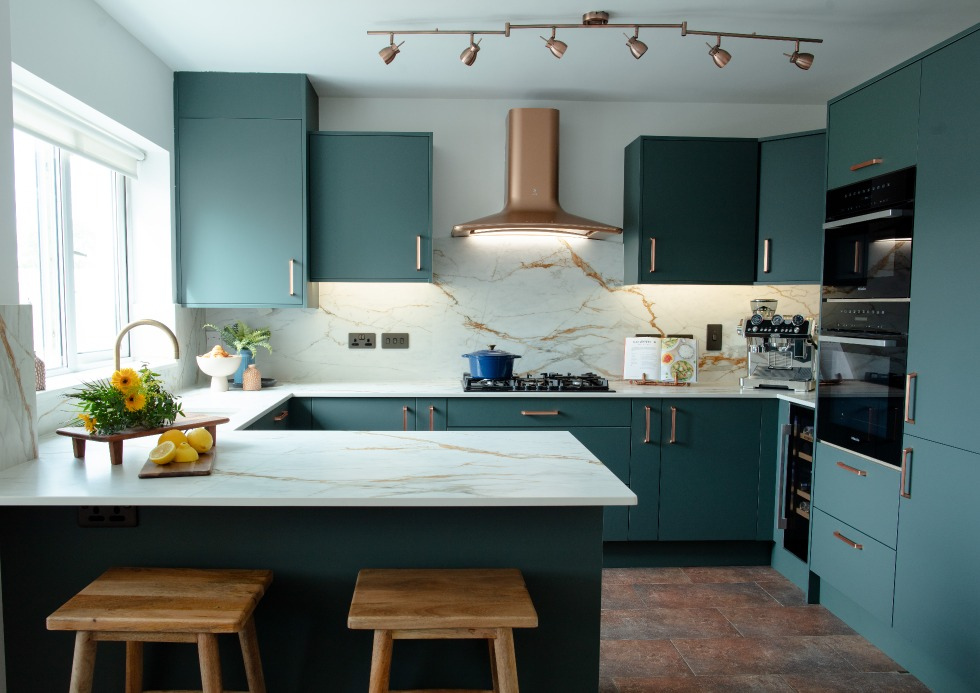
Position the sink, the hob/oven, and the refrigerator at the points of a triangle.
Purpose of the Golden Triangle in Kitchen Design
The main goal of the Golden Triangle is to:
-
Maximise kitchen efficiency – keeping all essential work areas within easy reach.
-
Improve workflow – reducing unnecessary movement between tasks.
-
Streamline traffic flow – avoiding congestion in busy cooking zones.
No matter which “point” of the triangle you’re working at, the other two are nearby, helping you cook and prepare meals faster.
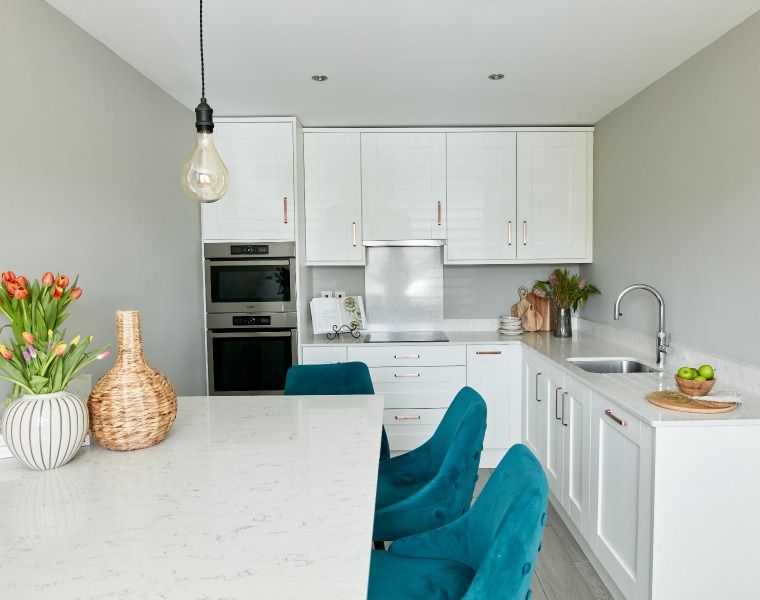
The Golden Triangle improves workflow
Kitchen Triangle Dimensions: The Traditional Guidelines
For a functional working triangle, designers recommend:
-
Each side should be 1.2–2.7 metres long.
-
The total perimeter of the triangle should be 4–8 metres.
This ensures your kitchen feels spacious enough to move freely, yet compact enough to avoid wasted steps.
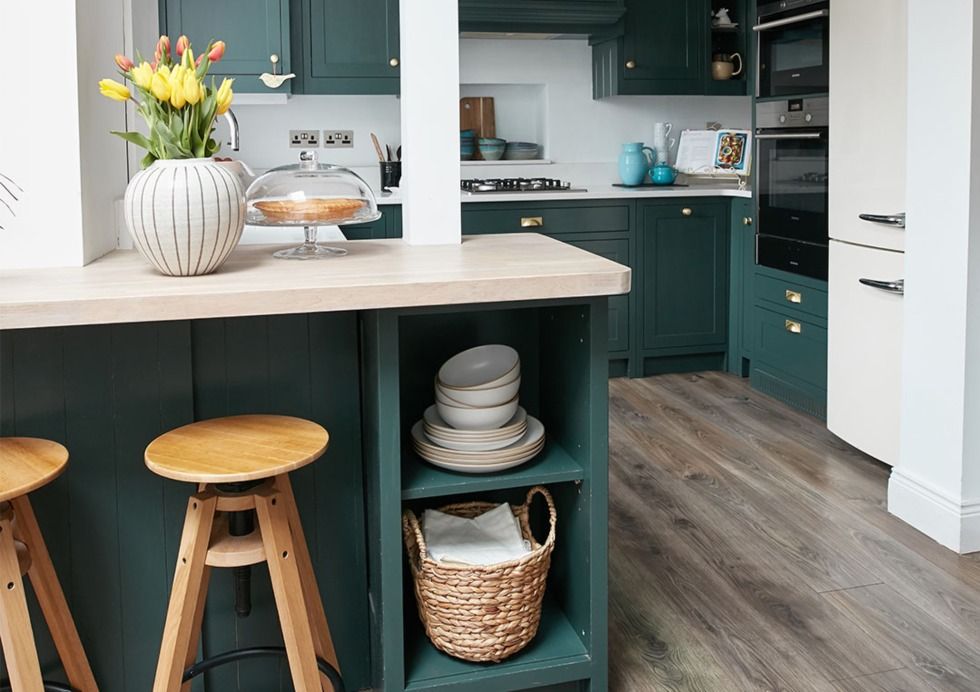
Your kitchen feels spacious yet compact
What Are the Three Main Points of a Kitchen Triangle?
-
Sink – for food prep, washing, and cleaning.
-
Refrigerator – for storing fresh and frozen ingredients.
-
Hob/Oven – for cooking and baking.
Does the Kitchen Triangle Rule Still Work Today?
Yes, but with some modern adjustments.
The rule works well for many layouts, especially L-shaped and U-shaped kitchens.
However, certain designs such as galley kitchens or kitchens with large islands can make it trickier to follow exactly.

Three Points of a Kitchen Triangle
Is the Golden Triangle Outdated for Modern Kitchens?
In the 1940s, kitchens were smaller, closed-off spaces designed for a single cook.
Today, kitchens are open-plan, social spaces where multiple people may prep, cook, and gather at the same time.
That’s why modern designers often adapt the triangle into a zoned kitchen layout.
Instead of focusing solely on efficiency, they design around how you use your kitchen whether that means a prep zone, a baking zone, or a social island area.
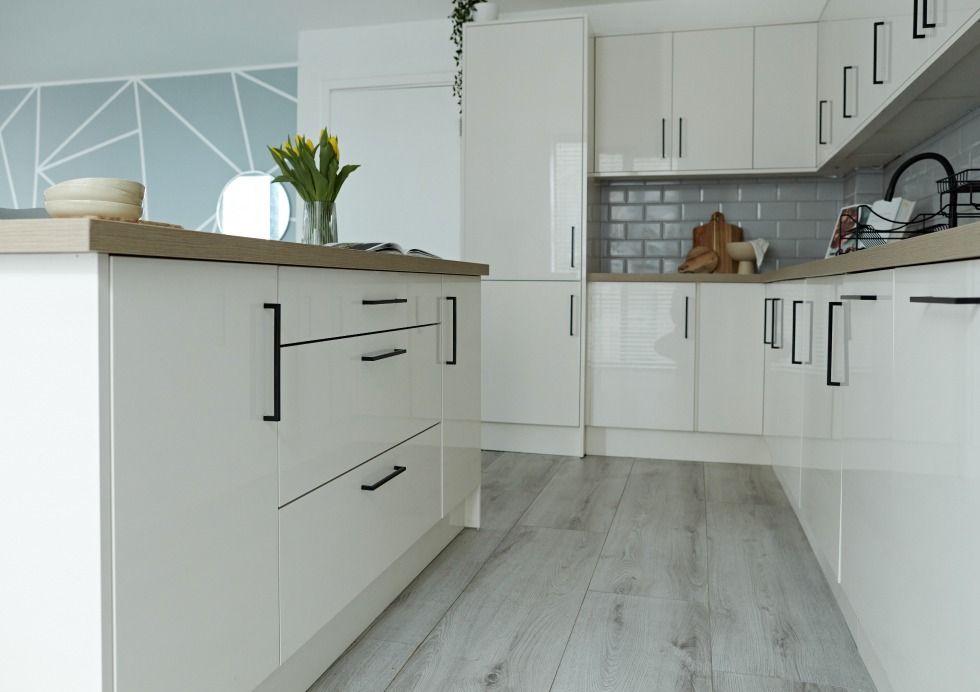
Focus on having a prep zone, baking zone etc.
Kitchen Triangle vs. Kitchen Zones
While the triangle focuses on the “big three” appliances, kitchen zoning groups elements by task:
-
Prep Zone – sink, chopping area, knives, cutting boards.
-
Cooking Zone – hob, oven, pots, utensils.
-
Storage Zone – fridge, pantry, cupboards.
Many modern kitchens blend triangle efficiency with zonal flexibility.

Kitchen zones group elements by task
Final Thoughts: Should You Use the Kitchen Triangle Rule?
The Kitchen Triangle Rule remains a proven starting point for an efficient kitchen layout.
However, it’s not a one-size-fits-all rule. Use it as a guide, then adapt it to suit:
-
Your kitchen shape.
-
How many people cook at once.
-
How you use your kitchen, whether for cooking, entertaining, or family time.
In short: the Golden Triangle still works but in 2025, it’s more of a golden guideline.